The Jax-Glam Beauty Blog
Expert Skin, Brows & Beauty Advice in Bristol
A Simple Skincare Routine for Trans Feminine & Hormone-Changing Skin
Share this post
If you’re transitioning from male to female, your skin may feel very different to what’s often discussed in “feminine skincare”.
Many trans women start with:
- Thicker or tougher skin texture
- Larger pores
- Oilier skin or congestion
- Sensitivity or breakouts as hormones change
This routine is designed to be gentle, effective, and supportive, helping your skin adapt during transition — without overwhelming it.
Consistency matters more than complexity.
Step 1: Remove Eye Makeup (PM only)
If you’re wearing eye makeup regularly, removing it properly is essential — especially mascara and eyeliner, which can irritate the skin if rushed or rubbed.
How to do it properly:
1. Soak a cotton pad with eye makeup remover or micellar water
2. Press two pads together so they’re evenly damp
3. Close your eyes and gently press the pads onto your lashes
4. Hold for a moment to dissolve mascara
5. Gently wipe away — never rub or drag
6. Repeat if needed
7. Lightly wipe underneath the eyes (this skin is thin and delicate)
Your eyes should feel clean and comfortable, never irritated or sore.
Step 2: Cleanse Your Face
Cleansing is one of the most important steps for trans feminine skin — especially if your skin is naturally thicker or oilier.
The aim is to cleanse thoroughly without stripping the skin, which can worsen sensitivity or breakouts.
Option A – Using Pads (Micellar or Cleansing Water)
1. Soak a cotton pad with cleanser
2. Start in the centre of the face and wipe outwards towards the hairline
3. Always sweep towards the temples to avoid dragging the skin
4. Don’t forget the jawline and neck
Option B – Using Your Fingers (Cream, Gel or Balm Cleanser)
1. Massage cleanser into the skin using your fingertips
2. Use gentle, upward circular motions
3. This helps dissolve makeup, SPF and excess oil
4. Rinse with lukewarm water — never hot
Your skin should feel clean, comfortable and calm, not tight or squeaky.
Step 3: Tone (Optional Step)
Toner is optional — not essential.
Older-style toners were designed to counteract harsh cleansers. If you’re using gentle products, your skin’s pH is usually already balanced.
Some modern toners can help by providing:
• Light hydration
• Calming or soothing ingredients
• Gentle exfoliation
• A refreshing feel
If you enjoy using toner, you can apply it with a cotton pad or mist lightly over the skin.
Step 4: Exfoliate (1–2 x per week)
Exfoliation can be especially helpful for trans feminine skin, which may be thicker or prone to congestion.
However, over-exfoliating is one of the most common mistakes, particularly during hormonal changes.
How to exfoliate safely:
1. Apply exfoliator with your fingertips
2. Use gentle circular movements
3. Avoid harsh scrubbing or pressure
4. Rinse with lukewarm water
Your skin should feel smooth and calm afterwards — never red or sore.
Step 5: Eye Cream
The eye area is delicate and often one of the first places to show dryness or sensitivity.
How to apply:
1. Use your ring finger to apply a small amount
2. Dot under the eyes along the natural orbital bone
3. Gently tap or massage using small circular movements
4. Optional: use a cooling eye roller to de-puff and soothe
Avoid applying too close to the lashes.
Step 6: Moisturise
Moisturising is essential — especially as hormones can change how your skin holds onto hydration.
Skipping moisturiser can lead to increased oil production and sensitivity.
How to apply:
1. Apply to clean hands
2. Press into the skin using upward and outward motions
3. Patting is gentler than sweeping and avoids pulling the skin
Tip:
• Day moisturiser = lighter texture, comfortable under makeup
• Night moisturiser = richer, supports overnight skin repair
Your skin should feel soft, supported and balanced, not greasy.
Step 7: SPF or Serum (depending on time of day)
Morning Routine – SPF
SPF protects the skin from sun damage, pigmentation and sensitivity — all of which can be heightened during hormone changes.
Apply every morning, even on cloudy days.
Evening Routine – Serum
At night, serums help support hydration and skin repair.
Gentle ingredients to look for include:
• Hyaluronic acid
• Ceramides
• Niacinamide
How to apply:
Press gently into the skin using upward motions — never drag.
Supporting Your Skin as You Grow Into Yourself 💛
Skin changes during transition are completely normal. Your skin may need time to adjust, and progress isn’t always linear — and that’s okay.
This routine is designed to support your skin, not fight it, helping it feel calmer, more balanced and more comfortable as it changes.
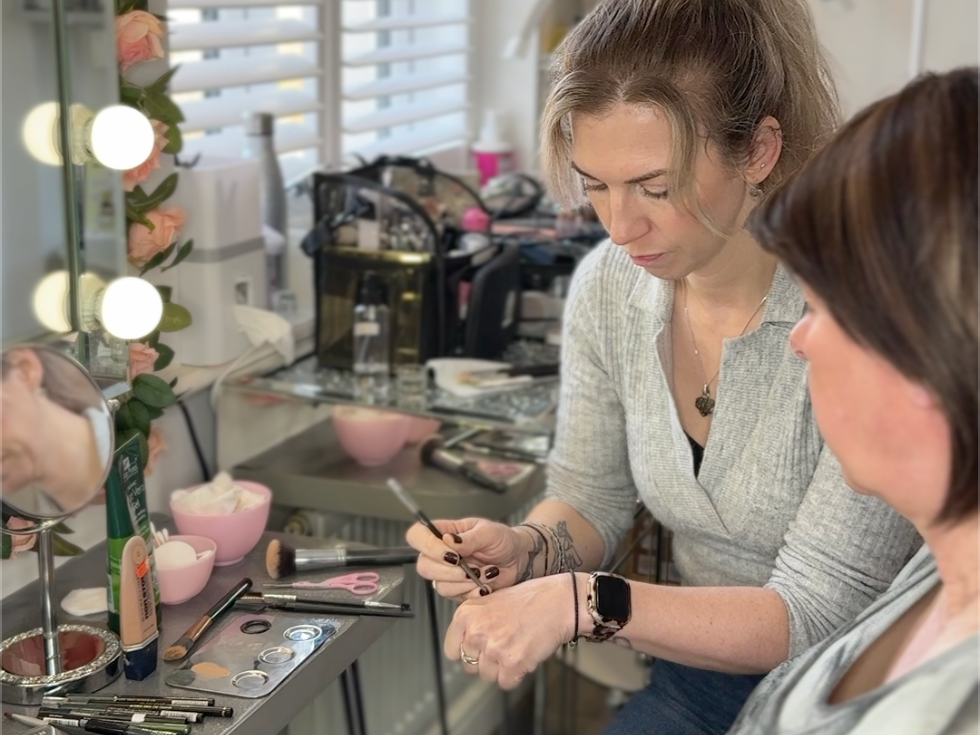
If you’d like professional support, my Aqua Hydrating (Hydra) Facial is a gentle yet effective treatment that deeply cleanses, hydrates and soothes the skin. It’s particularly helpful during hormonal changes, when skin can feel unpredictable or sensitive.
If I can help with a facial, makeup lesson, a makeover or brows during your journey, I offer a private, inclusive, one-to-one salon from my home in Lyde Green, Bristol.
There’s no judgement, no pressure, and no expectations — just a calm, supportive space where you can come in privately, ask questions, learn about your skin, and begin to feel confident and comfortable in your own skin.
I’d love to help you learn to
love your new self 💛
Online booking available • Private home salon • Lyde Green, Bristol